
Acarous Gray Describes Bility’s Rigging Claims As Baseless
…Warns Against Eroding Public Trust

|
Getting your Trinity Audio player ready...
|
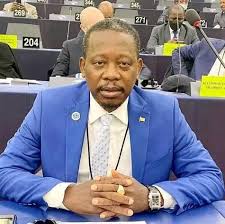
Monrovia-December 2, 2925: Former Montserrado County District 8 Representative Moses Acarous Gray has come out swinging against remarks made by Citizens Movement for Change (CMC) political leader Musa Hassan Bility who alleged that the Unity Party (UP) rigged the 2023 presidential runoff election in Nimba County based on an increase in votes compared to the first round.
In a sharply worded statement, Gray described Bility’s claim as political noise dressed up as arithmetic, arguing that a rise in votes during a runoff is not only normal but expected in competitive elections-particularly in politically charged counties like Nimba.
According to Gray, runoff elections fundamentally differ from first-round voting because they consolidate fractured political loyalties. “In the first round, multiple parties split the electorate. In the runoff, those votes realign,” he wrote. “That mathematical reality cannot magically be repackaged into an allegation of fraud.”
Gray emphasized that the 2023 runoff saw increased national mobilization, higher voter enthusiasm, and intensified grassroots campaigning-factors that traditionally push turnout upward in battleground regions. Nimba County, with its history of razor-edge politics and high civic participation, naturally became a magnet for heightened engagement.
He added that political alliances formed between rounds, endorsements were publicly announced, and many voters who either abstained or supported eliminated candidates in the first round returned to cast ballots in the runoff-a pattern well-documented in electoral democracies worldwide.
“The narrative that increased votes automatically equals rigging is intellectually lazy and politically reckless,” Gray declared. “It discounts voter agency and undermines the credibility of legitimate electoral processes.”
Importantly, Gray reminded the public that Liberia’s National Elections Commission (NEC) had already conducted reviews, complaint hearings, and post-election validations. None, he said, yielded findings that substantiated widespread fraud claims in Nimba County or elsewhere sufficient to overturn results.
“Elections are won through groundwork, coalition-building, and turnout strategy not conspiracy theories,” Gray wrote, adding that defeated candidates or their allies must show verifiable evidence rather than “social-media speculation and emotional assumptions.”
In a broader critique, Gray warned that persistent unproven allegations risk corroding public trust in democratic institutions. “When leaders casually throw out rigging claims without proof, they aren’t attacking opponents-they’re attacking democracy itself,” he stated. “Liberia already carries enough scars from instability. We shouldn’t reopen wounds just to score political soundbites.”
He concluded with a call for political maturity as the country pushes forward under its new leadership. “Disagreement is patriotic. Disinformation is destructive. Our democracy deserves arguments anchored in facts, not fantasies.”
As the political dust from the 2023 elections continues to settle, Gray’s rebuttal underscores a growing demand from segments of Liberia’s political class for evidence-based discourse and a shift away from rhetoric that could erode the electoral confidence painstakingly rebuilt after years of conflict.
In today’s Liberia, the message is clear: numbers speak, but only when read with honesty, not hysteria.

Comments are closed.